SpaceX’s Starship Clears Major Test Hurdle Ahead of Historic IPO Push
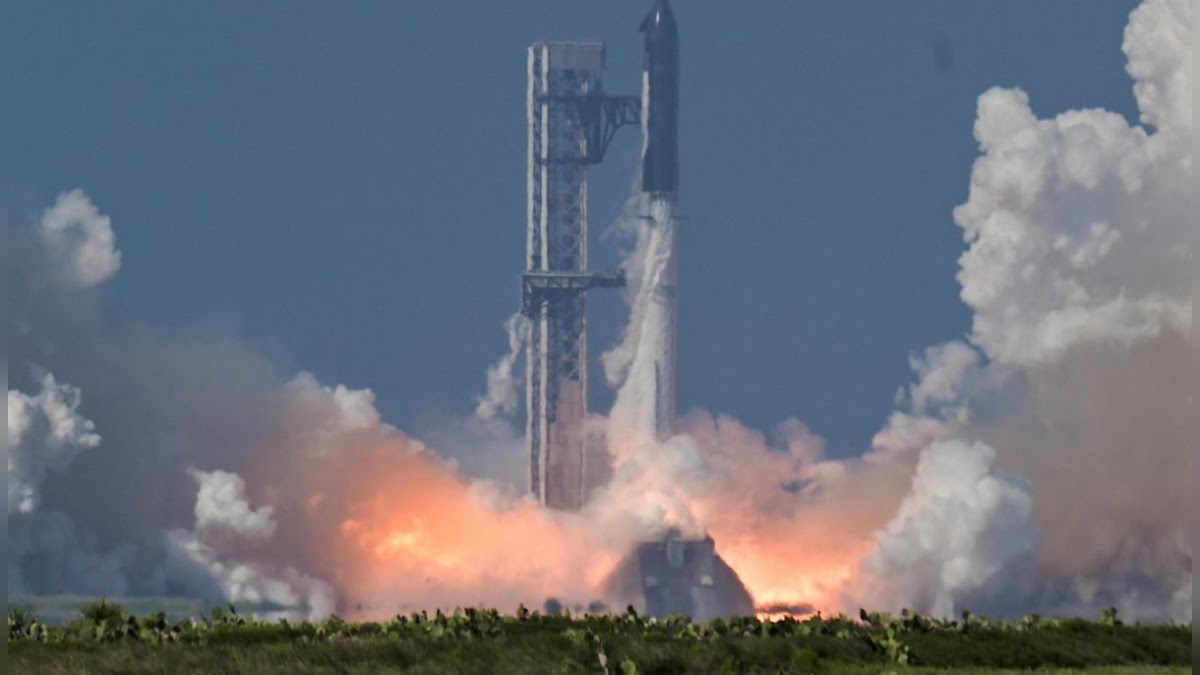
SpaceX moved a step closer to turning its ambitious Starship program into a commercially viable space system after the company completed a largely successful high-profile test flight of the upgraded rocket on Friday, marking a critical moment for Elon Musk’s long-term space ambitions and the company’s anticipated public listing. The launch, which featured the debut of the new Starship V3 configuration, saw the massive spacecraft deploy mock satellites, survive atmospheric re-entry, and complete a controlled splashdown in the Indian Ocean after more than an hour in flight. Though engineers encountered a few technical issues during the mission, the outcome was widely viewed as a breakthrough for the company following years of explosive setbacks and costly development delays. Standing more than 40 stories tall, the rocket thundered off the launch pad at SpaceX’s Starbase facility in Texas around 5:30 p.m. local time. A blazing cluster of 33 Raptor engines powered the Super Heavy booster into the sky before the system separated cleanly minutes later, allowing the Starship upper-stage vehicle to continue its ascent. Despite losing one of its six engines during flight, Starship remained stable enough to carry out several mission objectives, including the release of 20 mock Starlink satellites. The spacecraft also deployed two modified satellites designed to inspect the vehicle’s heat shield and transmit engineering data back to Earth during descent. The mission represented the 12th Starship prototype test since 2023 and the first using the upgraded V3 architecture — a redesigned version of both the booster and spacecraft intended to support future lunar missions, deep-space travel, and large-scale satellite deployment. SpaceX founder Elon Musk celebrated the outcome shortly after the splashdown. “Congrats SpaceX team on an epic first Starship V3 launch & landing!” The test ended dramatically as Starship re-entered Earth’s atmosphere, glowing intensely from extreme heat before descending nose-first into the Indian Ocean as planned. Moments after touching the water, the vehicle tipped over and exploded in a massive fireball — an ending that nevertheless triggered cheers among SpaceX employees gathered to watch the livestream. Importantly, SpaceX had already stated before launch that neither the booster nor the spacecraft would be recovered, even in the event of a successful mission. The primary objective was data collection and system validation. While the upper-stage spacecraft achieved most of its planned milestones, the Super Heavy booster experienced problems of its own. The booster splashed down in the Gulf of Mexico roughly six minutes after launch but failed to complete a planned engine burn intended to guide it back more precisely. Still, aerospace analysts described the overall mission as a major advancement for the company. Kathleen Curlee, a research analyst at Georgetown University’s Center for Security and Emerging Technology, called the launch: “Another meaningful step forward in SpaceX’s broader strategy of building the launch capacity needed to support the company’s expanding ambitions in space.” She added that although the flight experienced “some anomalies,” it nonetheless delivered “significant operational and engineering data” that will help refine future missions. The successful demonstration arrives at a pivotal financial moment for SpaceX. Investors are closely watching Starship’s development ahead of the company’s expected initial public offering next month — a debut that analysts believe could become the largest IPO in history, with Musk reportedly targeting a valuation of around $1.75 trillion. Starship sits at the center of nearly all of SpaceX’s future revenue ambitions. Musk envisions the fully reusable rocket dramatically lowering launch costs while expanding the company’s Starlink satellite business, supporting orbital data centers, and eventually transporting humans to the Moon and Mars. SpaceX has already invested more than $15 billion into the Starship program, betting heavily that rapid flight testing and iterative engineering will ultimately deliver a reliable next-generation spacecraft. Unlike traditional aerospace firms that often prioritize caution, SpaceX embraces a more aggressive development culture that intentionally pushes prototypes to their limits. The V3 upgrade includes lighter but more powerful Raptor engines, improved maneuverability systems, and capabilities for ship-to-ship docking and in-orbit refueling — technologies considered essential for long-duration lunar and Martian missions. Those upgrades are also central to NASA’s Artemis program. In 2021, SpaceX secured a contract worth more than $3 billion to use Starship as the lunar landing system that could return astronauts to the Moon later this decade for the first time since 1972. However, several technological hurdles remain unresolved. One of the most critical is orbital refueling, a complex procedure that would require multiple Starship tanker launches to transfer fuel in space before deep-space missions can proceed. The process has never been attempted at the scale SpaceX envisions. Musk previously predicted Starship could make its first uncrewed trip to Mars by the end of 2026, though the timeline now appears increasingly unrealistic given the technical challenges still facing the program. Even so, Friday’s flight offered perhaps the clearest indication yet that Starship is evolving from an experimental prototype into a potentially operational launch system — one capable of reshaping both the commercial space industry and the future of human space exploration.
ONLY AVAILABLE IN PAID PLANS
Trending Global News Update